4.1. Industry Value Chain Analysis
4.1.1. Raw Material provider
4.1.2. Manufacturer
4.1.3. Distributor
4.1.4. End User
4.2. Industry Outlook
4.2.1. Produced Water from Oil and Gas Development and Critical Minerals
4.2.2. Overview of Produced Water Treatment Technologies in the U.S.
4.2.3. Current EPA - Produced Water Regulation
4.2.4. Case Studies: Zero Liquid Discharge Systems in U.S. Shale Gas Operations - A Performance Review
4.3. PESTLE Analysis
4.4. Porter's Five Forces Analysis
4.4.1. Bargaining Power of Suppliers
4.4.2. Bargaining Power of Buyers
4.4.3. Threat of Substitutes
4.4.4. Threat of New Entrants
4.4.5. Degree of Competition
4.5. Market Dynamics and Trends
4.5.1. Growth Drivers
4.5.2. Restraints
4.5.3. Opportunities
4.5.4. Key Trends
4.6. Competition Dashboard
4.6.1. Market Concentration Rate
4.6.2. Company Market Share Analysis (Value %), 2024
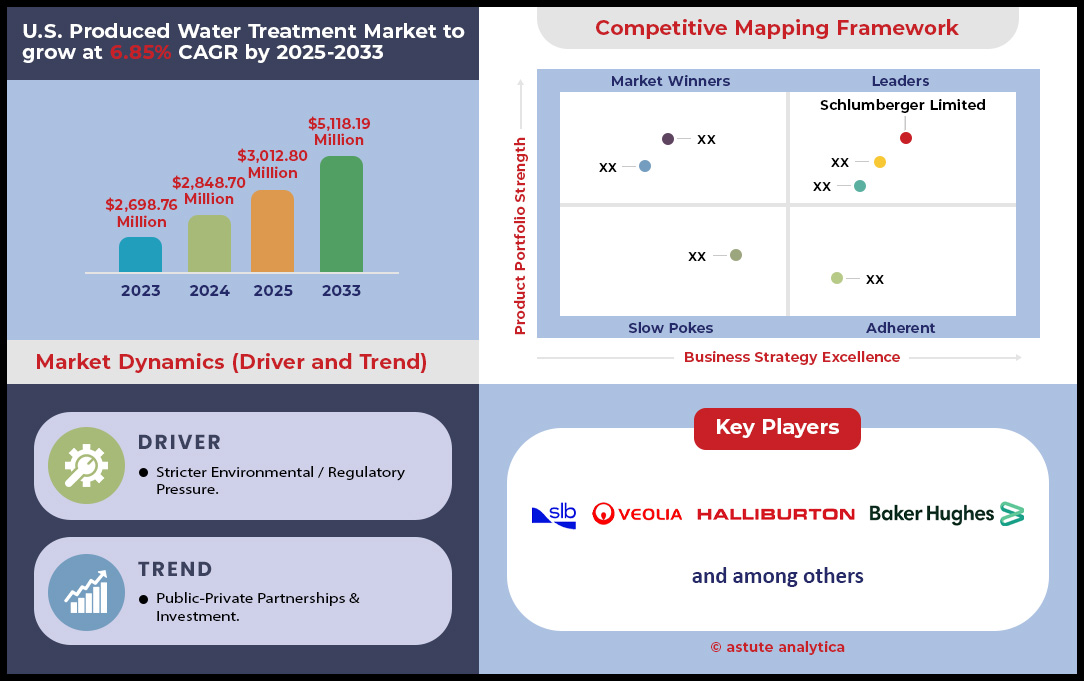
4.6.3. Competitor Mapping
4.7. Market Growth and Outlook
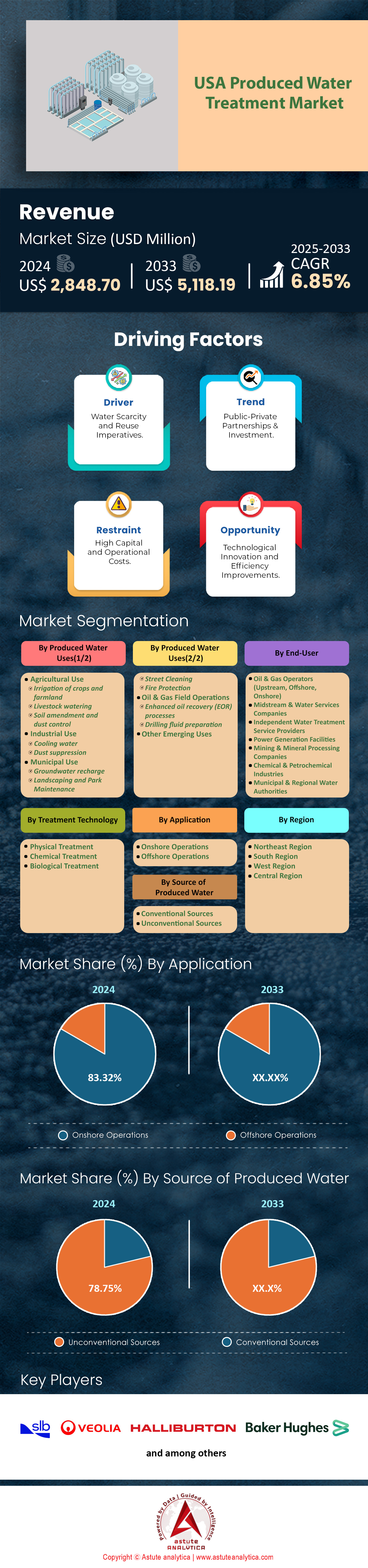
4.7.1. Market Revenue Estimates and Forecast (US$ Mn), 2020-2033
4.7.1.1. Adoption levels and addressable market potential by region
4.7.1.2. Key drivers, barriers, and feasibility factors per segment
4.7.1.3. Current and potential use volumes for each application segment
4.7.2. Technology & Cost Benchmarking
4.7.2.1. CAPEX & OPEX ranges by treatment stage and technology
4.7.2.2. Cost per barrel benchmarks by treatment type and application
4.7.2.3. Comparative economics of reuse vs. disposal
4.7.3. Economic Value Assessment
4.7.3.1. $/barrel equivalent value for each application
4.7.3.2. Disposal cost avoidance savings
4.7.3.3. Sensitivity analysis based on disposal fees, water scarcity, and regulations

 Schedule a Meeting